
IT Great Falls - Cybersecurity Services in Montana: Why Great Falls SMBs Need Managed Protection in 2026
Picture this: It's 7:30 AM on a Tuesday morning. You unlock your Great Falls manufacturing facility, fire up your computer, and discover every file encrypted.
Cybersecurity Services in Montana: Why Great Falls SMBs Need Managed Protection in 2026
![[HERO] Cybersecurity Services in Montana: Why Great Falls SMBs Need Managed Protection in 2026](https://cdn.marblism.com/0zlEooTay68.webp)
Picture this: It's 7:30 AM on a Tuesday morning. You unlock your Great Falls manufacturing facility, fire up your computer, and discover every file encrypted. A ransom note demands $50,000 in Bitcoin within 48 hours. Your production line sits idle. Your employees wait for direction. Your clients expect deliveries that won't happen today: or possibly this week.
This scenario isn't hypothetical fearmongering. It's the reality facing Montana small and medium-sized businesses in 2026, where cyberattacks have become the single greatest operational threat to local enterprises. The difference between businesses that survive these incidents and those that close their doors often comes down to one decision: whether they implemented managed cybersecurity protection before disaster struck.
The Montana Cybersecurity Landscape Has Changed
Great Falls businesses operate under a false assumption: that cybercriminals target large corporations and ignore regional SMBs. The data tells a different story. Manufacturing facilities, medical clinics, accounting firms, and professional service providers in Montana face the same sophisticated threats as Fortune 500 companies: but with a fraction of the defense capabilities.
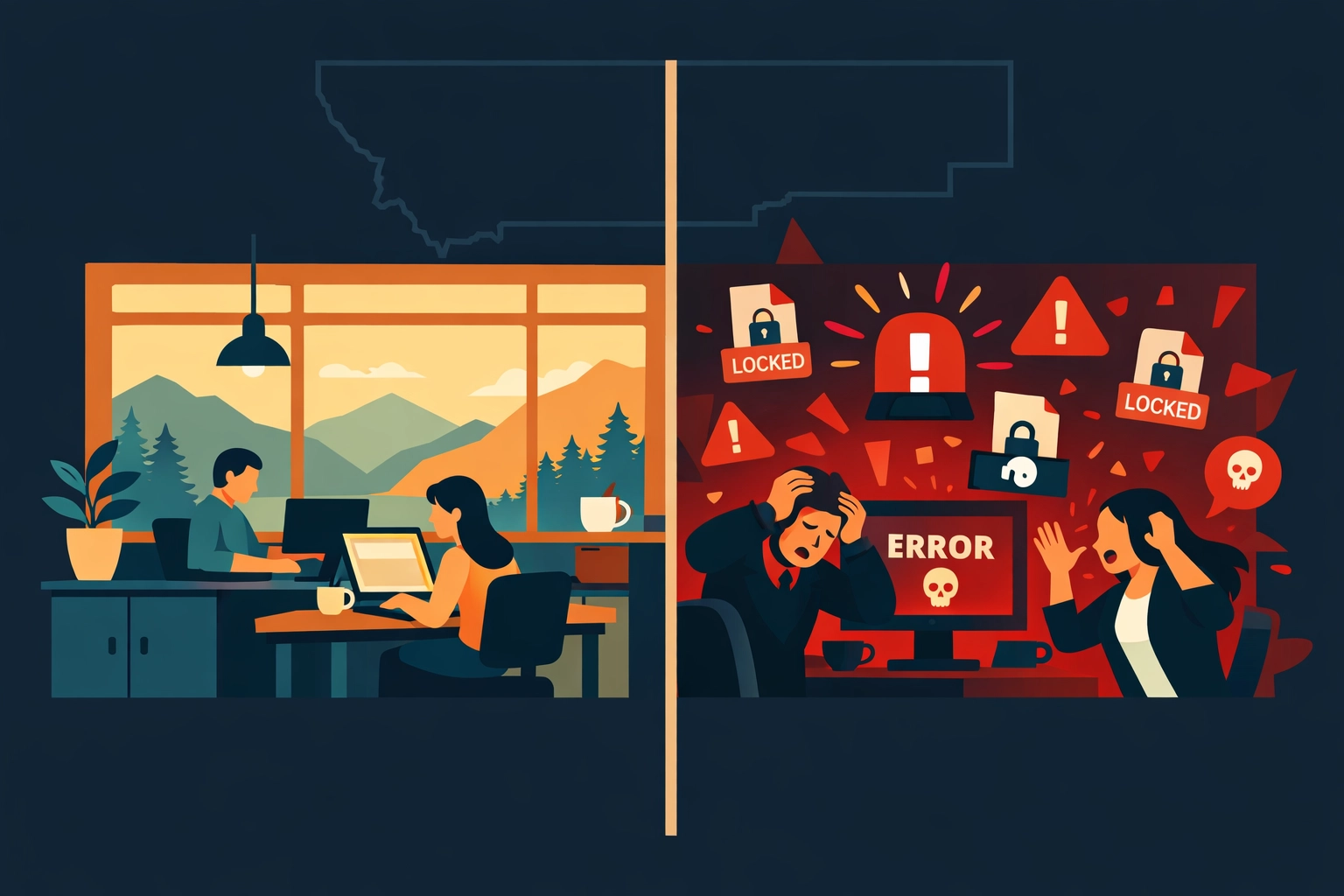
The economics make sense from an attacker's perspective. Great Falls businesses process valuable data: patient records, financial information, proprietary manufacturing processes: but typically lack dedicated security teams. They're high-value targets with minimal protection, making them ideal candidates for ransomware, data theft, and business email compromise schemes.
Federal regulations compound these challenges. Healthcare providers must maintain HIPAA compliance with strict patient data protection standards. Manufacturing and professional services firms increasingly face NIST cybersecurity framework requirements, particularly when working with government contracts or regulated industries. A single compliance violation can trigger devastating fines, legal liability, and reputational damage that small businesses cannot absorb.
Why Break-Fix Security Fails Montana Businesses
The traditional approach to IT security: addressing problems after they occur: creates a dangerous vulnerability gap for Great Falls companies. When you discover a breach, the damage has already happened. Customer data has been stolen. Operations have stopped. Recovery costs mount by the hour.
Consider the real costs of reactive security. A week-long production shutdown doesn't just mean lost revenue for that week. It means missed deliveries, broken client relationships, emergency overtime costs to catch up, and potential contract penalties. For healthcare providers, it means delayed patient care and potential regulatory investigations. For professional services firms, it means compromised client confidentiality and malpractice exposure.
The break-fix model also leaves businesses constantly one step behind evolving threats. Cybercriminals develop new attack methods daily. By the time you discover a vulnerability and patch it, attackers have already moved to different tactics. This perpetual game of catch-up drains resources while providing inadequate protection.
Montana businesses deserve better than crisis management. They need security architectures designed around issue prevention, continuous monitoring, and rapid threat detection before damage occurs.
What Managed Cybersecurity Protection Actually Delivers
Managed cybersecurity services transform security from a reactive expense into a prevention-first investment. Instead of waiting for alerts that your systems have been compromised, managed protection identifies suspicious activity in real-time and neutralizes threats before they impact operations.

Always-on monitoring provides the foundation. Security specialists analyze your network traffic, user behavior, and system logs 24 hours a day, seven days a week. When an employee clicks a phishing link at 2 AM on Saturday, the system detects the unusual behavior immediately: not Monday morning when you discover encrypted files.
Advanced threat detection goes beyond basic antivirus software. Modern managed services deploy next-generation firewalls, intrusion detection systems, and behavior analytics that identify zero-day exploits and sophisticated attack patterns. These tools catch threats that traditional security software misses entirely.
Incident response capabilities make the difference between minor disruptions and catastrophic losses. When a security event occurs, trained specialists immediately contain the threat, investigate the scope of compromise, and execute recovery procedures. This coordinated response reduces downtime from days or weeks to hours: sometimes minutes.
Compliance management removes the burden of navigating complex regulatory requirements. Managed service providers implement necessary controls, maintain audit documentation, and ensure your systems meet HIPAA, NIST, and industry-specific standards. When auditors or regulators come calling, you have the forensics-ready logging and compliance evidence they require.
The Cost-Saving Reality of Managed Protection
Great Falls business owners often hesitate at managed cybersecurity costs without comparing them to the alternative. A comprehensive managed security service typically costs $150–$500 per user monthly, depending on business size and complexity. This seems expensive until you calculate the cost of a single significant breach.
The average ransomware attack costs small businesses $84,000 in direct expenses: ransom payments, emergency IT services, legal fees, and regulatory fines. Indirect costs push total losses much higher: lost productivity during downtime, customer churn from compromised data, increased insurance premiums, and opportunity costs from diverted management attention.
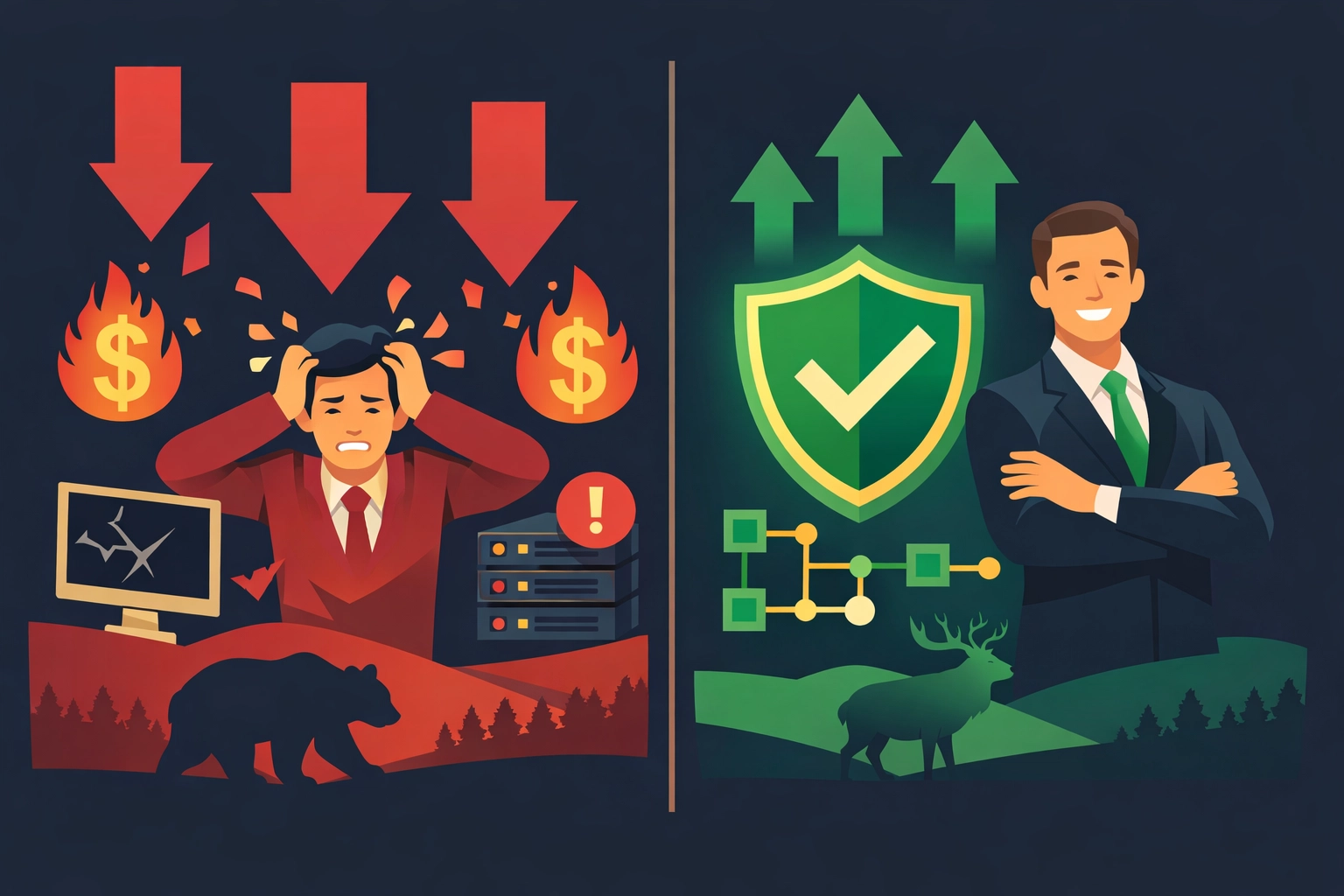
Managed services deliver substantial cost savings beyond breach prevention. Businesses eliminate the expense of hiring full-time security specialists: positions that command $90,000+ annual salaries in Montana's competitive IT market. They avoid the capital costs of purchasing, configuring, and maintaining enterprise security infrastructure. They reduce insurance premiums through demonstrable risk mitigation.
The maintenance-first approach also extends the lifespan of existing IT investments. Regular security patching, vulnerability assessments, and system optimization prevent the cascading failures that force expensive emergency replacements. Your infrastructure runs longer and performs better with consistent expert oversight.
Choosing the Right Cybersecurity Partner in Great Falls
Montana businesses benefit from working with local providers who understand regional operational realities. Great Falls companies face unique challenges: remote locations, limited high-speed internet infrastructure in some areas, small IT teams, and seasonal business fluctuations. Cybersecurity solutions need to account for these factors rather than applying generic approaches designed for urban enterprises.
Look for providers offering comprehensive service portfolios. Effective cybersecurity requires integrated capabilities: network security, endpoint protection, cloud infrastructure management, backup and disaster recovery, compliance services, and employee security training. Fragmented solutions from multiple vendors create security gaps and coordination nightmares.
Verify response capabilities and availability. When a security incident occurs at 9 PM on Friday, you need immediate assistance: not a message saying someone will call Monday morning. Ensure your provider offers genuine 24/7 support with clearly defined response time commitments.

Request transparency around monitoring and reporting. You should receive regular security reports detailing threats detected, vulnerabilities remediated, and compliance status. This visibility allows informed decision-making about security investments and provides audit documentation for regulatory purposes.
Building Your Cybersecurity Strategy for 2026 and Beyond
Great Falls businesses implementing managed cybersecurity protection should view it as infrastructure investment rather than operational expense. Like insurance, electricity, or internet connectivity, security services enable business continuity and protect against existential risks.
Start with a comprehensive security assessment. Professional evaluations identify current vulnerabilities, compliance gaps, and areas requiring immediate attention. This baseline establishes priorities and prevents wasted spending on unnecessary services while critical exposures remain unaddressed.
Develop layered defense strategies. Effective security combines multiple protective measures: perimeter firewalls, endpoint protection, email filtering, multi-factor authentication, employee training, and incident response planning. No single technology provides complete protection, but integrated layers create substantial barriers against successful attacks.
Plan for business continuity and disaster recovery. Even with excellent prevention measures, prepare for scenarios where attacks succeed. Maintain secure, tested backups of critical data. Document recovery procedures. Establish communication protocols for notifying clients, employees, and regulators about security incidents.
Invest in employee security awareness. The majority of successful cyberattacks exploit human vulnerabilities rather than technical ones. Regular training helps staff recognize phishing attempts, practice secure password management, and understand their role in maintaining organizational security.
The Great Falls Advantage
Montana businesses benefit from the expansion of local cybersecurity expertise. Established providers and new market entrants bring enterprise-grade security capabilities to regional SMBs at accessible price points. This democratization of advanced security services levels the playing field, allowing Great Falls companies to compete confidently in digital markets.
The story you write for your business determines whether you're telling clients about new growth initiatives or explaining why their data was compromised. Managed cybersecurity protection doesn't guarantee perfect security: no solution does. But it dramatically reduces risk, minimizes potential damage, and provides the expert response capabilities that make the difference between minor incidents and business-ending disasters.
For Great Falls businesses ready to move beyond reactive security crisis management, IT Great Falls provides comprehensive managed cybersecurity services designed for Montana's unique business environment. Our always-on monitoring, incident response, and compliance management help local companies protect what they've built while focusing on growth rather than crisis management. Connect with our team at 406-866-0128 or visit https://itgreatfalls.com.
No comments yet. Login to start a new discussion Start a new discussion